This procedure outlines the creation and use of the Content with Aside component, enabling you to design and organize content in a two-column layout.
Edit a "Content with Aside" Component in the Back Office involves three steps:
Step 1 : Access the Content with Aside
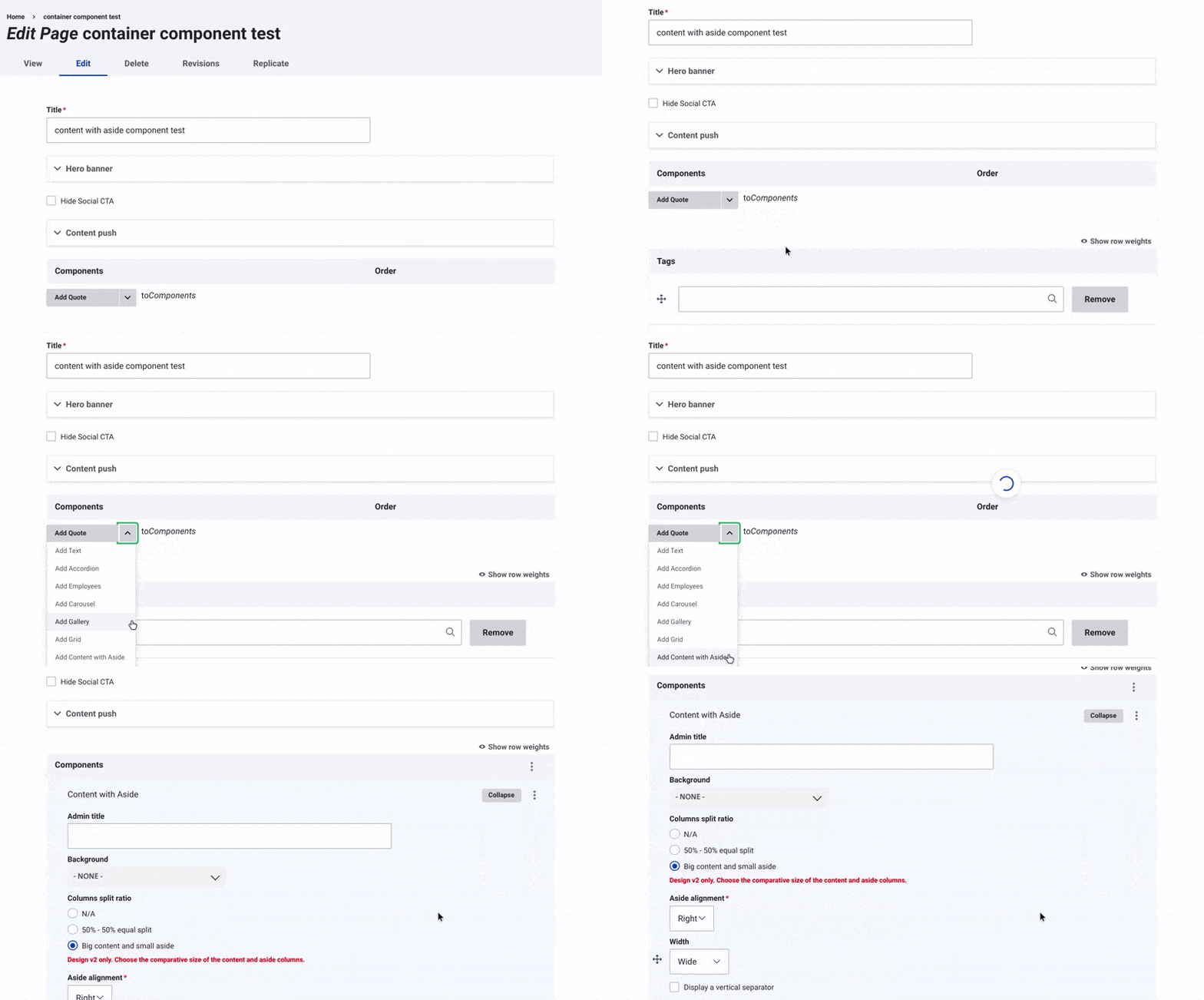
Once the title, hero banner, and content push of the page have been updated, you can start working on the content by adding a Content with Aside.
Add a Content with Aside:
- Click on the arrow next to "Add Quote to Component."
- From the dropdown menu, select "Add Content with Aside."
- Assign an admin title to the container, visible only in the back office. This makes it easier to organize and manage future edits.
Step 2 : Edit the Content with Aside
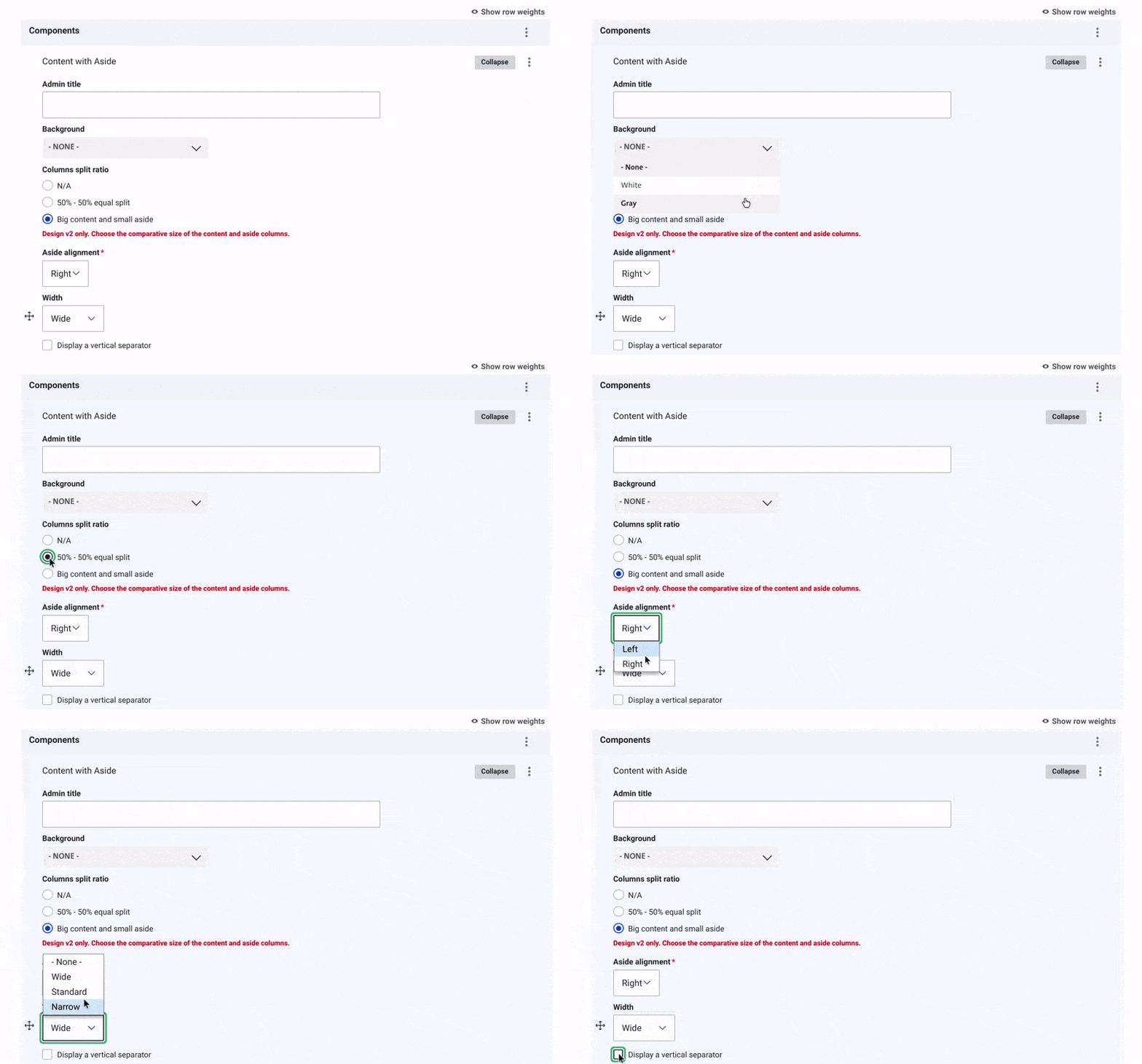
Customize the Content with Aside
- Choose a background color from the dropdown menu.
Step 3 : Add Content to the Content with Aside
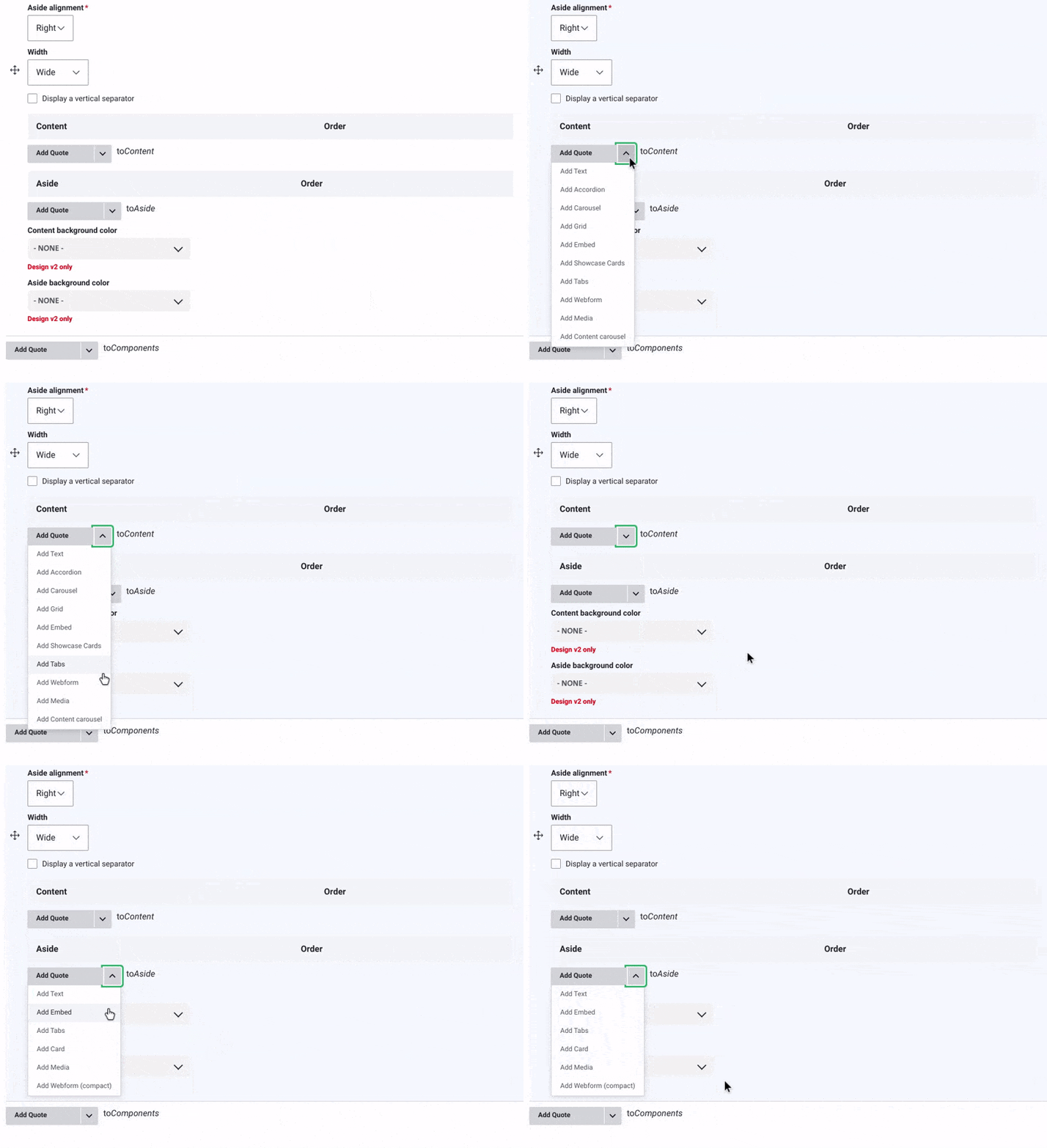
Add Content to the Content with Aside:
Content creation for "Content with Aside" is done in two steps, as you will work on one column at a time.
First, add Content to the "Content" row.
Click on the arrow next to " 'Add Quote' to Content."
From the dropdown menu, select the type of element you want to add, following these elements:
- Text: Add customizable text with various font styles, sizes, and media elements.
- Accordion: Organize content into collapsible sections.
- Carosel: Showcase images or media in a scrolling format.
- Grid: Create structured layouts for creative content organization.
- Embed: External content like videos, maps, or media using an Iframe or Integration code.
- Showcase Card: Highlight key information visually with an image, title, and description.
- Tabs: Create interactive sections for easier navigation.
- Webform: Add forms to collect user input.
- Media: Incorporate images, videos, or other media.
Then, add Content to the "Aside" row.
Similarly, click on the arrow next to " 'Add Quote' to Aside."
In the dropdown menu, you can choose from specific content types for the "Aside" column:
- Text: Add simple text content.
- Embed: External content like videos, maps, or media using an Iframe or Integration code.
- Card: Use cards to highlight information with an image, title, and description.
- Media: Include images or videos.
- Webform (Compact): Add a small form to collect user input.
Examples:
Achieving Sustainability in Agriculture & Farming
Veolia pioneers environmental solutions driving sustainability in agriculture. Our innovative approaches optimise farming operations for cost-efficiency while adopting sustainable practices in agriculture.
Veolia works alongside the agriculture industry, assisting farmers, manufacturers and other businesses to better protect the environment, comply with regulations and adopt sustainable practices in agriculture. As a leading provider of sustainable solutions, we prioritise responsible resource management and environmental awareness. Through efficient resource use, waste diversion and circular economy approaches, Veolia empowers the agriculture sector to minimise its ecological footprint. Our goal is to foster a greener future by integrating sustainability in agriculture across operations and promoting environmentally conscious mindsets.
Sustainability Challenges in Agriculture & Farming
Overcoming sustainability challenges is crucial for the agriculture industry to meet global food demands while preserving natural resources. The sector faces numerous hurdles:
- Stringent requirements on quality, safety, hygiene and traceability
- Cost control and economic performance
- Reducing environmental impact by managing water cycles, energy use, by-products, and end-of-life products
- Building a solid reputation for sustainable practices
- Pursuing a proactive approach to social responsibility

Sustainable Practices in Agriculture & Farming
By understanding the unique challenges faced by the agriculture industry, our team of specialists works closely with agricultural businesses to maintain profitability and operational efficiency, with a focus on sustainable practices. Veolia provides an integrated range of services and solutions to achieve sustainability in agriculture:
- Adopting direct irrigation and groundwater recharge approaches to optimise water usage across farming operations.
- Producing animal feed and fertilisers from food processing facilities, promoting circular economy practices.
- Recovering energy and water utilised at food processing facilities for improved resource efficiency.
- Recovering water, waste, and energy resources from food processors, retailers, and restaurants to reduce environmental impact.
Our comprehensive waste, energy, and water management services empower the agriculture sector to enhance sustainability and adopt sustainable practices throughout the product life cycle.
> Read more: Explore how Veolia are delivering integrated solutions to the aquaculture sector.

Veolia Customer Success Stories
Discover the transformative power of sustainable agriculture practices.
Our innovative approach combines innovative solutions, industry knowledge, and ongoing relationships with key stakeholders actively working within the agriculture industry. This positively places us in a position to create resilient farming systems that benefit both customers and the planet.
Farm Waste Recovery (FWR), part of the Industry Waste Recovery (IWR) group, plays a pivotal role in the recycling of agricultural packaging and products. Working in tandem we are efficiently providing collection, transport, and recycling services of polypropylene packaging for their closed-loop network across Australia.